
The 'Stud City' Story
The BodyGordon's published short story 'Stud City' is presented as a fictionalized version of his own experiences, exploring themes of loss, sex, and family dysfunction.
increasing Bearing strength in each event
 decreasing
Bearing strength in each eventdecreasingThe Story Within the Story
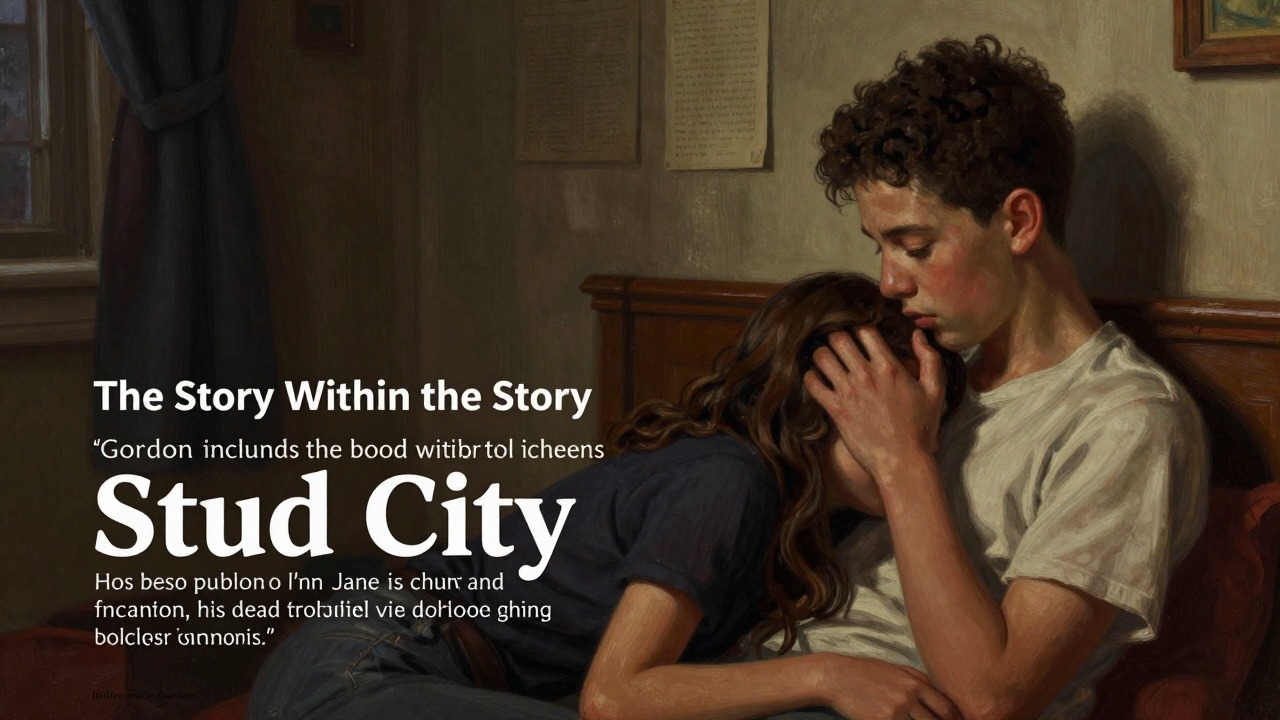
The Story Within the Story
The Text of 'Stud City'
Gordon includes the full text of his short story 'Stud City,' originally published in a college literary magazine. The story follows Chico, a teenage boy who has sex with a girl named Jane in his dead brother Johnny's room. Chico is haunted by Johnny's death and his stepmother Virginia's manipulative presence.
The Themes
'Stud City' deals with grief, sexual awakening, and family conflict. Chico's relationship with his father and stepmother mirrors Gordon's own feelings of invisibility after Dennis's death. The story is raw and sexual, reflecting Gordon's youthful attempts to process his emotions.
Gordon's Commentary
After the story, Gordon reflects on its flaws and pretensions. He acknowledges it is derivative and misogynistic, but also the first story that felt truly his own. He sees it as a stepping stone to his later work, a necessary stage in his development as a writer.
The Connection to Reality
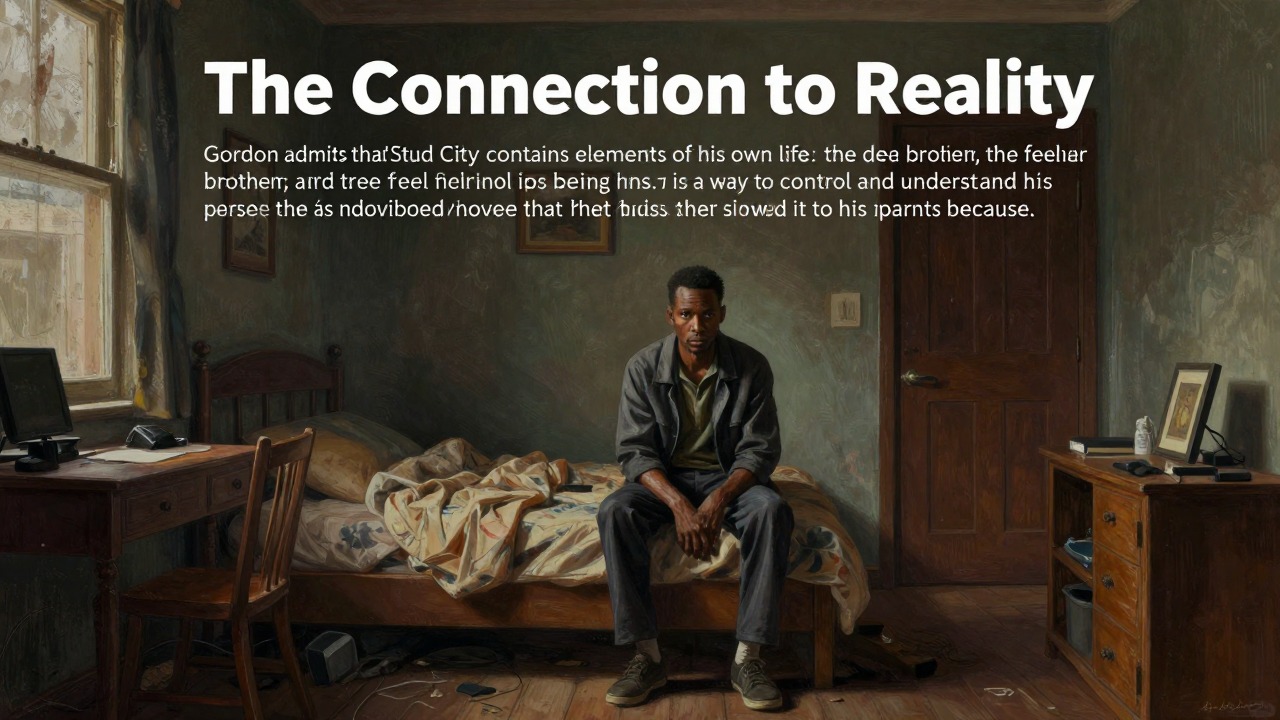
The Connection to Reality
Autobiographical Elements
Gordon admits that 'Stud City' contains elements of his own life: the dead brother, the preserved room, the feeling of being ignored. The story is a way to control and understand his past. He notes that he never showed it to his parents because it contained too much truth.
The Bloody Show
Gordon quotes the line 'You always know the truth, because when you cut yourself or someone else with it, there's always a bloody show.' The story is a painful but necessary act of self-expression. It marks his transition from a boy who experiences life to a writer who shapes it.
The Writer's Path
The inclusion of 'Stud City' shows how Gordon's childhood experiences directly inform his art. The story is a bridge between the boy who walked the tracks and the man who writes novels. It underscores the theme that storytelling is a way to make sense of the past.
During the narrative present (1980s), but the story is set in March of an unspecified year
During the narrative present (1980s)
